by kfi | Nov 15, 2025 | In the Spotlight, Projects - current |
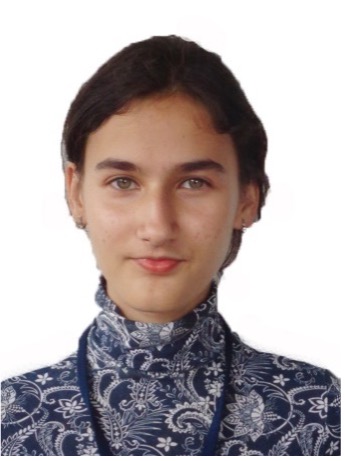
Recipient: Anushka Moudgil, Awarded for two years, Grade 11 & 12
Anuskha is the recipient of the Russell De Valois Scholarship (23-25). Having studied in a Cambridge program prior to KIS, Anushka was looking for an academic program that would allow her to enhance her worldview in Economics and Business. Partly Russian and partly Indian by ethnicity, Anoushka was a wonderful student with a keen interest in STEM subjects. Apart from her academic pursuits, Anoushka immersed herself in our Music and Hiking program. In her own words, “As my two years in KIS came to a conclusion, I left Kodi with a myriad of memories and experiences. Whether it was having discussions with my teachers, lounging on the library lawn with my friends, or just taking in the beauty of Kodaikanal out on hikes, everything KIS had offered me helped me grow. To grow in intellect, to grow in kindness, to grow in friendship and understanding. To me, these memories and experiences aren’t just something to look back fondly on, but also lessons and reflections of how I was able to develop myself into a better person, and how I can keep developing myself further. For instance, KIS has helped me foster a stronger learning attitude to the point where right now, during the summer break, I can’t help but try to teach myself some more German, piano and music theory! KIS has also helped me determine what I would like to continue doing. Though initially I was unsure if I could handle the intensity of Medicine, after much thought and encouragement from teachers and my career counselor, I feel confident in my choice of pursuing Medicine at Saint Petersburg State University. I would like to thank you dear donors once again for helping my reality take the shape that it did and for helping me set the stage for me to shape my future.”

by kfi | Nov 14, 2025 | In the Spotlight, Projects - current |
Recipient: Vedika Dave, Awarded for 2 years, Grade 11 and 12
Vedika Dave was awarded the KIS STEM scholarship for Women (23-25). Vedika aspires to be a Scientist pursuing her passion in Bio Chemistry. Originally from Gujarat, Vedika has already made many strides in her chosen field, working with eminent professors in Indian Universities and assisting them with their research work. At KIS, she was a member of Science National Honors Society, and was head of the Girls in STEM club. A skilled dancer, Vedika was a constant in any school performance. Overall, Vedika has been a valuable addition to the KIS community! In her own words, “Studying at KIS was a transformative experience for me. The IBDP has been an extremely rigorous program and it has stretched my abilities in several ways. I have also had the opportunity to connect with students from so many different backgrounds and I feel like these friendships will last a lifetime. I am thankful to all my donors who have made this journey possible for me.”
by kfi | Jul 15, 2025 | In the Spotlight |
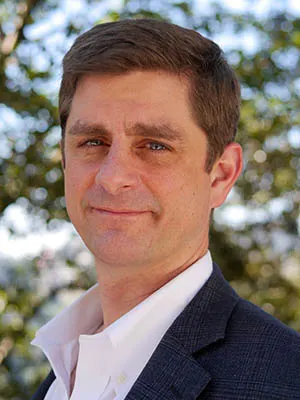
Dr. Brad has served as an educator and school leader for 25 years at locations in Africa and Asia. Prior to joining KIS, he lived in Mussoorie, Uttarakhand, where he was Vice Principal at Woodstock School. His previous tenure at Woodstock stands testament to the long standing history that Woodstock and Kodai share. Brad comes with the knowledge that helps him navigate the rich legacy of our school and alumni community.
A teacher, published researcher, and senior administrator since 2001, Dr. Brad thrives on group dynamics and relishes the challenge of channeling collective passion into collaborative initiatives. Student wellbeing is his guiding principle; every initiative he undertakes places students first.
Dr. Brad believes strongly in character development, the vital importance of role-modeling, active classroom pedagogy, and holistic education. He is committed to the promotion of integrity, kindness, forgiveness, and other core Christian values that infuse individual well-being.
A native of the US Carolinas, Dr. Brad grew up between beautiful beaches and mountains, which fostered an appreciation of the powerful role outdoor education can play in whole-child development. He and his family have since embraced nature’s wonders wherever they go, from the foothills of the Himalayas to the coastlines of Japan and China. This leaves much for them to explore in the Palani Hills and surrounding coasts.
by kfi | Jul 15, 2025 | In the Spotlight |
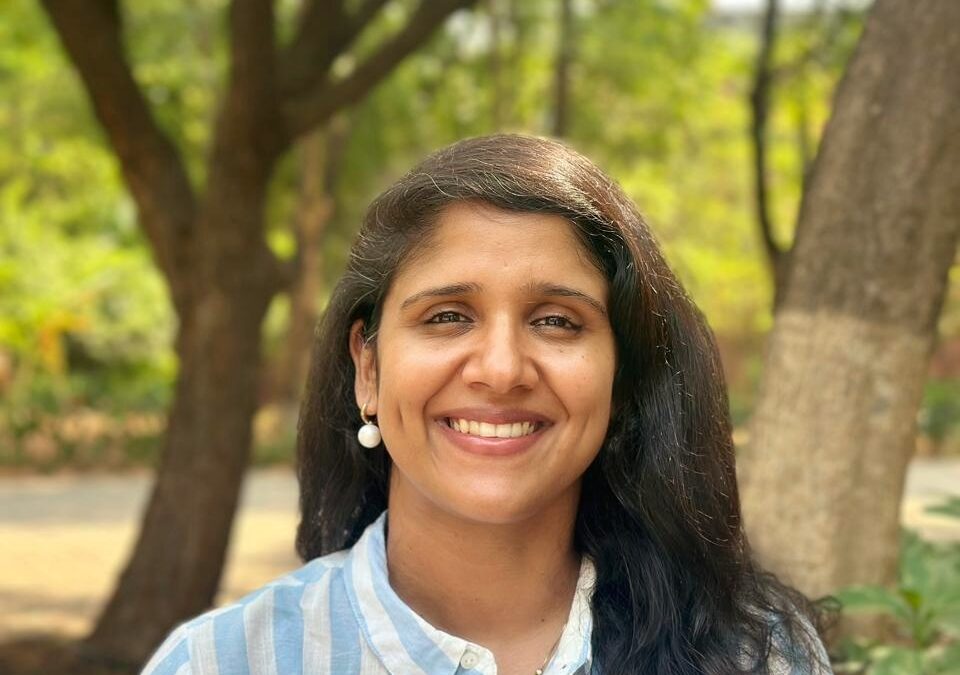
Tara Menon is a seasoned alumni relations professional with a rich multicultural background and over a decade of experience spanning education, communications, development, and global alumni engagement. Born in West Bengal, India, and raised in the tea gardens before migrating to Kenya, Tara’s early years were marked by cultural diversity and adaptability. Her formative education across India and East Africa—including time at the Lawrence School Lovedale and St. Andrew’s School Turi—instilled in her a deep appreciation for community, identity, and the transformative power of education.
After completing a triple honours degree in English Literature, Psychology, and Sociology from Christ University in Bangalore, Tara pursued two postgraduate degrees at the University of Edinburgh: an MSc in Literature and Modernity, and a second MSc in International Development and African Studies. These academic experiences cemented her commitment to development and global engagement.
Professionally, Tara has worked across East Africa, the Middle East, and India. Her early roles with the United Nations Development Programme in Kenya and USAID in Tanzania showcased her project management acumen and passion for empowering communities. This was followed by a stint in Dubai with a boutique advertising agency, where she led campaigns for global clients like HTC, Intel, and Hershey’s across the MEA region.
Tara returned to India in 2016 to join Woodstock School in Mussoorie as Alumni Relations Coordinator. There, she built Woodstock’s first comprehensive alumni programme from the ground up—launching a professional networking platform, running global alumni events, initiating mentoring programmes, and strengthening ties between alumni and the school. Her efforts culminated in a cleaner database of over 5,000 active alumni and more than 30 events held across five continents.
Since 2020, Tara has served as the Alumni Relations Coordinator for the Aga Khan Schools, a network of 186 schools across seven countries. In this role, she created and executed a global alumni relations strategy—collecting and managing alumni data, launching professional networking tools, coordinating regional and global events, and building a communications strategy that included newsletters, social media, and brand development. She also established the Aga Khan Schools Alumni Network and supported alumni engagement initiatives that connected graduates with current students through mentoring, career talks, and service opportunities. Her work has extended beyond India, contributing to global strategy from her base at the Aga Khan Academy in Hyderabad.
Tara’s multicultural upbringing and global professional journey allow her to bring a unique lens to alumni engagement—one that is inclusive, strategic, and deeply personal. Her belief in the power of connection, storytelling, and shared history has shaped every programme she has built. She continues to champion alumni involvement as a powerful force in strengthening institutions, building community, and inspiring the next generation.

by kfi | Sep 30, 2024 | In the Spotlight |
Commonsense Wisdom with a splash of Wry Wit
By Mark S. Porter
As a kid, John R. MacKay II attended school for several years in a remote region of India. “It was remote,” John emphasized. “You wouldn’t get a newspaper for three weeks.”
In between semesters at Bowdoin College during the summer of of 1953, John signed on as a crew’s messman, or messergutten, aboard a Norwegian tanker. The ship sailed “up and down both sides of South America,” before John signed off in Charleston, SC, in early September “and somehow making it back to school in time.”
The next summer, John and a fellow student who hailed from the Netherlands hitchhiked across the U.S. to Los Angeles, “scrambled for work,” and then hitchhiked back to Bowdoin in time for the autumn semester.
From 1956 to 1960, John served in the U.S. Navy, including a stint aboard a warship, the U.S.S. Haverfield, patrolling a route extending from the Alaskan island of Adak to the mid-Pacific atoll of Midway, part of the Distant Early Warning Line looking out for squadrons of Soviet bombers en route to the American mainland.
In Rutgers Law School, John became editor of the Rutgers Law Review in 1964 and ’65. And then, as a new lawyer, John served in 1965 and 1966 as Law Clerk for New Jersey Supreme Court Chief Justice Joseph Weintraub.
John modestly mentions his excursions and accomplishments while noting he started life as a third-generation Nutley resident, and attended public schools there beginning in 1939. “I was brought up on mashed potatoes and meatloaf in New Jersey.”
The Dunworkin Connection
“The Dunworkin Club has been such a positive experience in my own life that I always have my antenna up looking for others to bring in,” said Gene Shahan, who’s sponsored several members. His “sponsorees” include John MacKay.
“I met John in a small social gathering … and within probably five minutes had determined he would be a terrific addition. He was waxing enthusiastically about a series of historical fiction books he was reading, and he had a great way of inspiring enthusiasm for his subject, even though I had never heard of the author. That was not a unique experience, as John often speaks with knowledge and familiarity about nearly anything that sparks an interest in him.”
John remembers Gene mentioning “this group, the Dunworkin Club. We have an interesting president, Joe Lunin.”
“Joe Lunin!?!?” John recalled exclaiming. He’d known Joseph Lunin when they attended Rutgers Law School, and then had worked together as volunteers to amend state regulations.
John quickly expressed interest in joining the club.
The Mix of Intellect and Action
“John is one of those people who has led a much more interesting life than I have,” acknowledged Sandford M. Sorkin. “John’s stories about traveling alone on tramp steamers and his time in India are remarkable. I may be wrong, but I believe he has more good stories about the subcontinent than Rudyard Kipling. To date, his stories don’t seem to include wild animals and jungles, but they do include books.
“His knowledge of history, arts, and the law elucidates every subject we discuss.”
“He has often opened my eyes to subjects, people, and events that have inspired me to do some more research,” said Gene. “There are occasions where we may have seemingly irreconcilable views, but after additional digging and review, even if no one abandons a basic premise, one cannot leave without appreciation for his views and underlying knowledge.
“John is never content to accept a first-level review of nearly anything, always taking time to pull up additional information, put it into the correct context, and then, if possible, taking a position. Opinions on nearly anything are offered only with care, around John, and he can often counter, with a great sense of humor, so that instead of heated arguments, which never end, the finishing touch can be laughter for everyone,” Gene noted.
“It is no surprise that all of these qualities have contributed to a career as a corporate attorney which has been highly regarded by his peers.”
Recently attending a Now Or Never Breakfast at the Cloverleaf Tavern, John arrived with a small oxygen tank to counter the effects of pulmonary fibrosis, “the wages of sin for smoking for 40 years,” he admitted.
“I suggested to him that he needed a much more exciting story about being out of breath,” Sandy said. “I suggested that in the same vein as calling a shaving nick a fencing scar, he might claim that being short of breath had some connection to climbing in the Himalayas.
“It turns out he did climb in the Himalayas. I guess that reality sometimes beats imagination.”
John’s Annotated Life Story
“My father was assigned by his employer, Western Electric, to manage its interests in India, Pakistan, Ceylon, and Burma,” John said of his years in India. “Our home was Juhu Beach, just outside Bombay.
“At age 15, I flew with my little brother from New York to Bombay, with a three-day stopover in Rome, in a couple of old TWA Constellations. After 10 days there, I flew in an Air India DC-3 from Bombay to Madras — Mumbai to Chennai, in the new vocabulary — followed by an overnight train trip to Kodai Roads in South India, and then a four-hour bus trip up the Ghat from the hot plains (hundreds of hair-pin turns) to Kodai at 7,000 feet above sea level.”
From 1950 to 1952, John was enrolled in Kodaikanal School, Kodaikanal, in South India. “It was an American missionary school, operated by a group of Protestant church groups for the children of American missionaries. They allowed others in,” including kids from consulates and embassies.
Founded in 1901, the school was named for its location in Kodai, a “hill station” created by the British Raj to seek coolness in the higher altitude and escape the sweltering heat. “Some American missionaries chanced upon it” and established the facility.
“The missionary school gave me a really excellent background,” John said. “It changed my life. I got to this place, and the attitude of the other kids was to work hard, and you worked hard, too.”
Later on, John joined the Koti Friends International, an alumni group that supports Kodaikanal School. Around the mid-1970s, the school morphed into an international school, offering an IB (International Baccalaureate). “I was very active as president of the alumni group for about six years.” During his leadership, John traveled at least eight times to India. “I saw the whole world in my trips: South Africa, Nepal, Vietnam, Australia.”
Enrolled in Bowdoin College in 1952 as an English major, John was active on the Bowdoin Quill literary publication and the Bowdoin Orient student newspaper. He admitted he was “ore active than I should have been on the fraternity party scene.
“I went to this wild environment,” recalled John. “I learned how much I could screw up and get away with.”
A psychology professor gave him a series of psychological tests and deduced that he should become a lawyer. At the time, John dismissed the analysis.
From 1960 to ’62, John was a technical writer and editor for ITT Communications Systems. “I translated engineeringese into English and did some early work on satellite communications.”
The Law’s the Law
John then entered Rutgers Law School.
“Once I went to law school, I had to work hard,” he said. “I was married and had one child. The big plum was getting to be the editor-in-chief of the Law Review.”
Married now to Abby, John’s been married twice before and he has four children. Abby and John reside in West Caldwell. He previously resided in Montclair for 10 years and Essex Fells for 20.
Joe Lunin and John MacKay have known each other since they were students at Rutgers Law.
“I started law school in 1963. John was a year ahead of me and about six years older than most of the other students,” recalled Joe. “He became the editor in chief of the Rutgers Law School Law Review. Upon graduation (with honors), he became a clerk of Chief Justice [Joseph] Weintraub of the NJ Supreme Court. At the end of his clerkship he went with the Lowenstein Sandler law firm in Newark.”
“He was a very prestigious judge,” John said of Weintraub. “He was the head of one of the three branches of government in New Jersey.”
Becoming a partner in 1970, John credits Alan Lowenstein as his mentor. “He believed in pro bono. One of the things I’m most proud of is the firm always had a history of pro bono work.”
Around 1970, John and another New Jersey attorney joined a pro bono lawsuit against the Benevolent and Protective Order of Elks. Founded in 1868, the Elks required each of its members to be “a white male citizen.” This stance was upheld in three national conventions, and a lawsuit was filed nationally against the Elks for racial discrimination.
“In Wisconsin, the national convention held a vote and the members overwhelmingly voted to keep the racist clause,” John said. “They were sued everywhere,” including two lawsuits in New Jersey, one of them filed by John MacKay. He sought to take away property tax exemptions and liquor licenses. “We won, and ultimately the Elks changed their constitution,” repealing the discriminatory clause in their national constitution in 1973.
“After he graduated law school, I didn’t see him again until 1970 when I got out of the army and was looking for a job,” noted Joe. “I interviewed at the Lowenstein firm. John was chosen to take me on the tour. I went with a different firm. But, one of his partners and one of the partners in my firm, along with a solo practitioner, were the commission to revise the New Jersey Business Corporation Act. John became the secretary of the commission responsible for keeping notes and preparing the text of the amendments.
“While I was a helper for that commission. John urged me to start a committee to revise the New Jersey Nonprofit Corporation Act. I did that; that revision became effective in 1983.
“I called John from time to time to get insight to provisions of the Business Corporation Act, and he occasionally called me to get insight to the Nonprofit Corporation act,” Joe said.
“Our careers were parallel, revising corporate laws” said John, who became chairman of the NJ Corporation Law Revision Commission. “We were fans of each other. Now, we’re good friends.”
He joined Lowenstein Sandler in 1966, becoming partner in 1970, with the law firm relocating from Newark to Roseland. “The firm grew from 10 lawyers when I started to more than 200 when I retired,” he said.
John’s participated in numerous civic activities. He became president of the Newark Day Center, which he said was the nation’s second-oldest continuously operated charitable organization.
He’s been a board member and treasurer of the Nutley Chapter of the American Red Cross, and a board member of the William Carlos Williams Center for the Arts in Rutherford. He’s been a board member of the United Way of Essex and West Hudson. He became president of the Rutgers Law School Alumni Association.
John has been an adjunct professor of law at Rutgers Law School and Seton Hall Law School. And he authored the 3-volume “New Jersey Corporations and Other Business Entities,” published first in 1992 and updated since.
It may not necessarily be reflected in the prose of “New Jersey Corporations…” but John is a good storyteller, Joe observed.
“Some time ago, while John was visiting Australia, he decided to shave off his beard. He did shave it off, but forgot that his picture on his passport would remain unshaved. All turned out well except for spending a bit of time with airport personnel establishing his new face with his passport.”
After a long chat for this Dunworkin Chronicle spotlight, John departed with Abby for a Zoom cocktail party with dear friends.
Joined by their spouses, John MacKay’s fellow imbibers were … Joe Lunin and Gene Shahan.

by kfi | Aug 22, 2024 | In the Spotlight |
Kathy and Wayne Beckwith’s journey with Kodai School started when Wayne taught Industrial Arts in 1987, Kathy worked in Admissions, and their three children attended Kodai School. Their journey with Kodai School continued off and on since then, with their most recent volunteer semester wrapping up in May 2023. Have a look at the video of the Beckwith’s journey, and the impact it has had on their family, at this link: https://drive.google.com/file/d/1qtpEKpzoRLFjFXuBICpfBMvrv5Mno9zS/view?ts=66a16b2a